Population Management
The Population module provides an overview of households and individuals which have been imported into the system. On each screen in the Population module users can search by Household and Individuals. Additionally, one can search by different categories of data on the Household or individual.
What Can I Do in The Population Module?
When imported households and individuals are merged with the overall population of beneficiaries in HOPE, they are moved to the Population module. The individual and households in this module form the basis of those who can be included in target populations to be marked for receipt of payments for UNICEF programmes. Once the imports are merged to population, each household and individual will receive system generated unique IDs. Additionally, this module provides a sanctions flag if a record was identified as a potential match against the UN sanctions list. Household details such as amount received, programmes enrolled, payment records and any grievances and feedback recorded are also provided in this module.
Presumption of Innocence
Possible matches will continue to receive cash transfers until a decision has been made on whether the beneficiary is unique or duplicated through the Grievance and Feedback Module. The population screen for Households provides searchable data both by different categories and by the Household ID.
How to navigate the population module
-
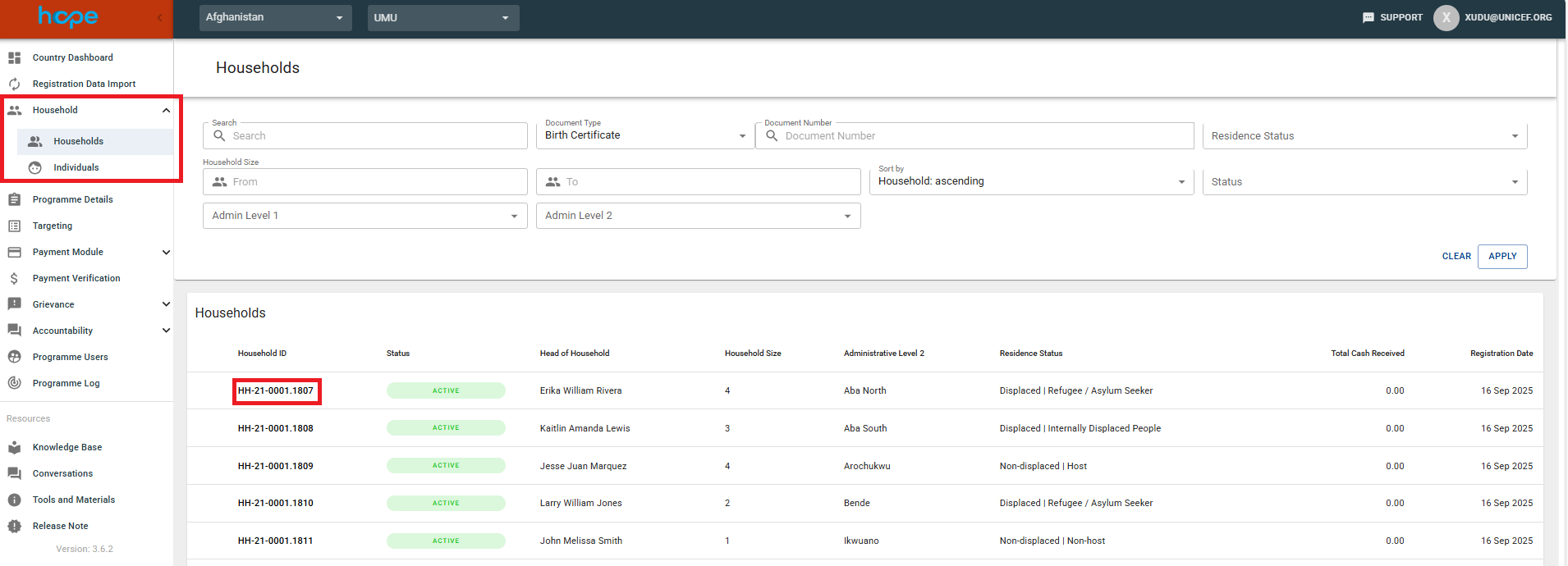
The household view page displays a search bar with several filters and a list of households.
-
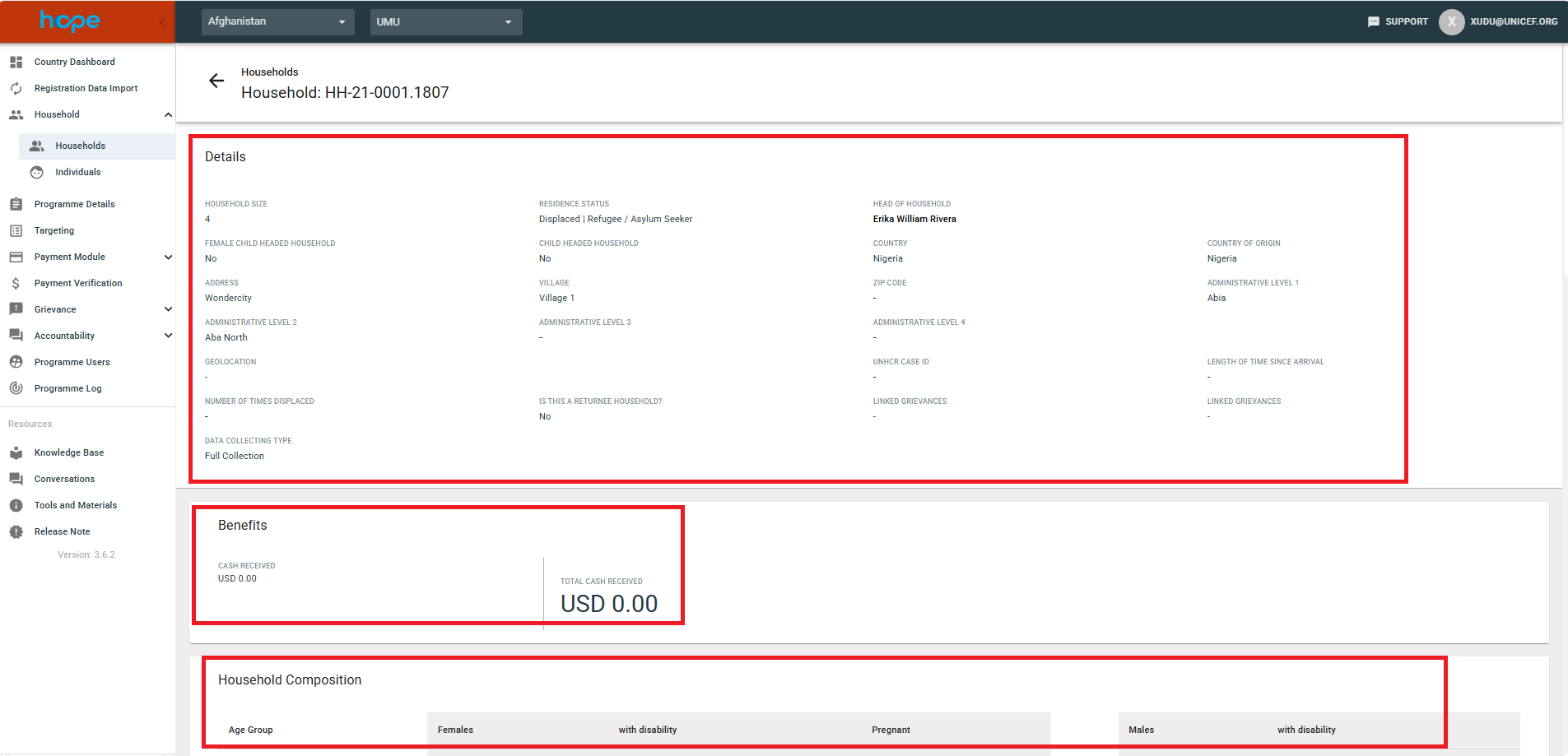
To view household details, click on the Household ID link, benefits received, household composition, list of individuals in the household, payment records, vulnerabilities, registration details and activity log are also displayed.
-
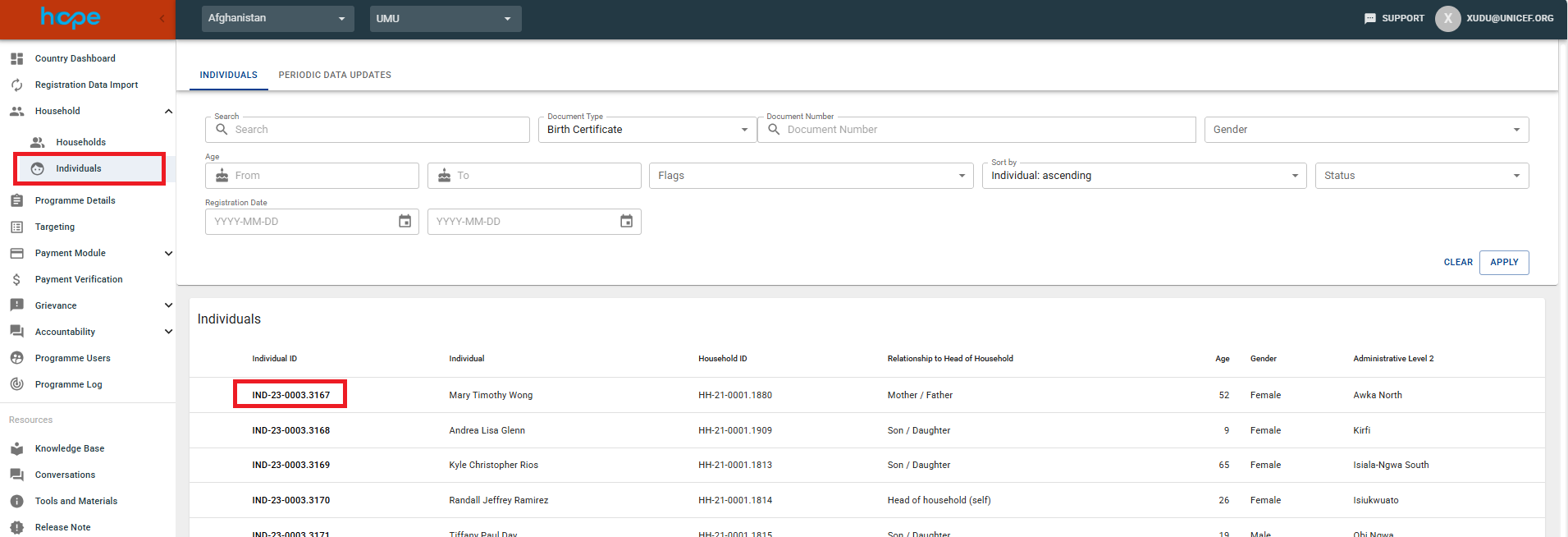
The individuals view page displays a search bar with several filters and list of individuals.
-
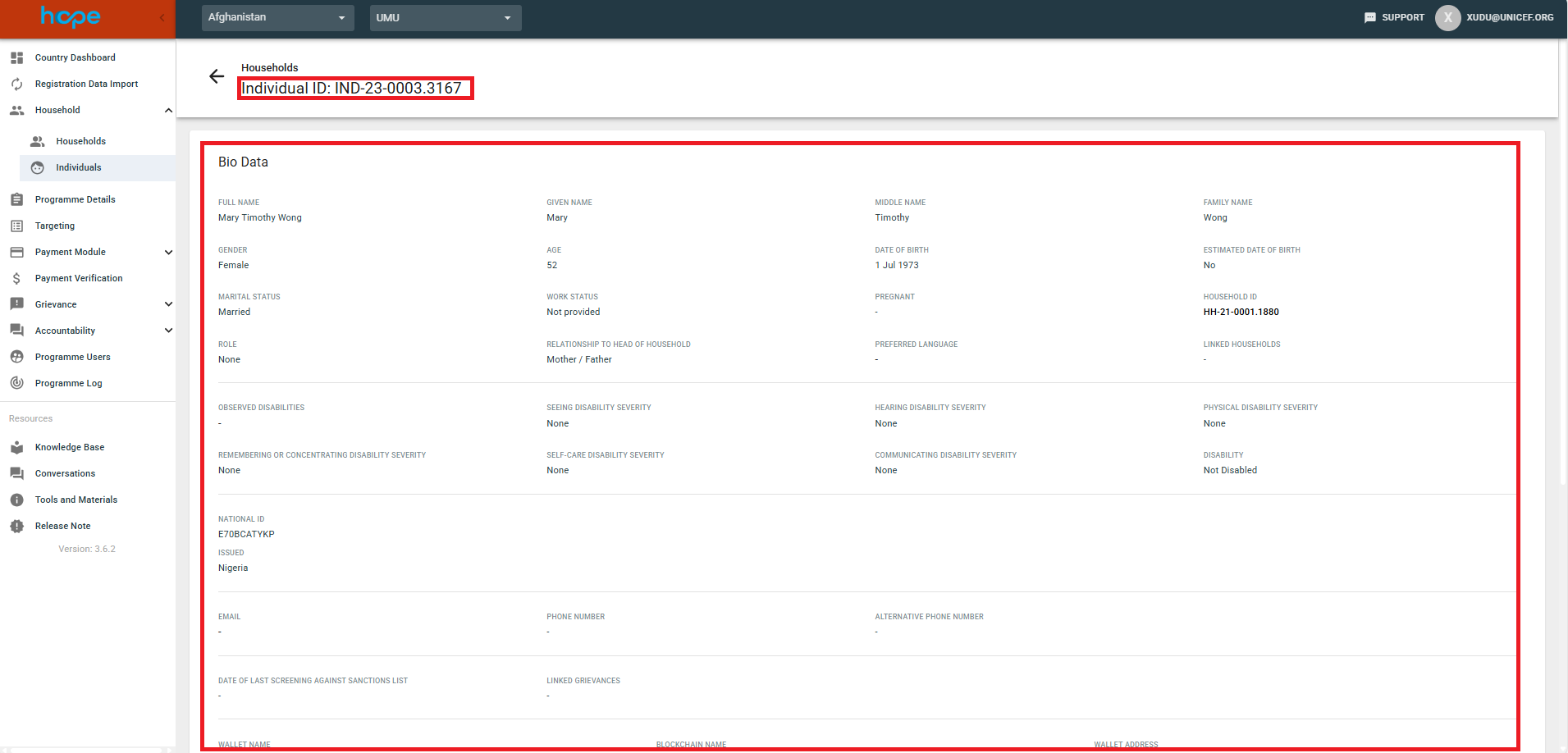
To view individual details, click on the Individual ID link, bio data, vulnerabilities and an activity log are also displayed.
Known Affected Beneficiaries
Next to the household composition, the household record carries a second set of age and gender disaggregated counters, the known affected beneficiaries. They state how many people HOPE has knowledge of in that household, and they are maintained for every data collecting type - including the partial ones, which have no composition of their own.
These counters are empty when the number is unknown; an empty value must never be read as zero. See Known Affected Beneficiaries for how the values are derived, which individuals are counted and when they are refreshed.
Known affected beneficiaries were introduced by AB#326718: Calculate Gender and Age disaggregated group ALSO for Partial Data collecting Type ⧉.
Identification Key
The Bio Data section of the individual details page displays an identification key when one is available for the individual. This key can be used as the registration-time identity reference for the individual.
The field label can be configured separately for each programme by a HOPE administrator. For example, a programme can use a label that reflects the identity reference used in its registration process. If no programme-specific label is configured, the field is displayed as Identification Key.
The identification key can be manually compared with an identity reference returned by a Financial Service Provider (FSP). References included as additional columns in a reconciliation file are available in the relevant Payment Record details. See Payment Reconciliation.
Programme-specific identification key labels were introduced by Change Request 299147: Identity Field customisation & PaymentRecord flex fields ⧉.